

No two diamonds are exactly alike. Each one is unique. This is why over the years a universal standard for identifying diamonds has been set.
The quality and value of a diamond is defined according to the 4 Cs: carat, clarity, colour and cut.
1. Carat
The weight of a diamond is expressed in carats.
1 carat = 0.2grams and 1 carat = 100 points.
 .05
 .10
 .15
 .20
 .25
 .50
 .75
 1.00
 1.25
 1.50
 1.75
 2.00
 2.50
 3.00
 4.00
 5.00
IF
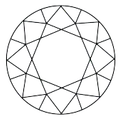
Internally Flawless
VVS1
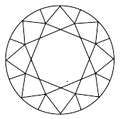
Very Very Small Inclusions
VVS2
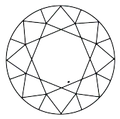
Very Very Small Inclusions
VS1
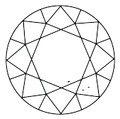
Very Small Inclusions
VS2
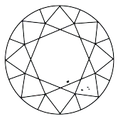
Very Small Inclusions
SI1
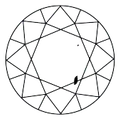
Small Inclusions
SI2
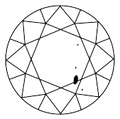
Small Inclusions
I1
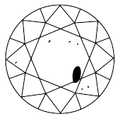
Inclusion
I2
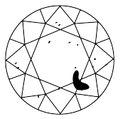
Inclusion
I3
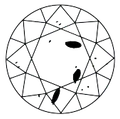
Inclusion
2. Clarity
All natural diamonds have traces of their growth history, as they are a product of nature.
With clarity, we describe a diamond’s purity.
3. Colour
Most diamonds range in colour from colourless to slightly yellow.
A perfect diamond has no colour at all.
- D
 Exec White +
- E
 Exec White
- F
 Rare White +
- G
 Rare White
- H
 White
- I
 Slightly Tinted White +
- J
 Slightly Tinted White
- K
 Tinted White +
- L
 Tinted White
- M
 Tinted Colour
- N-O
 Tinted Colour
- P-R
 Tinted Colour
- S-Z
 Tinted Colour
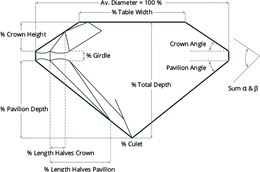
Proportions
Polish
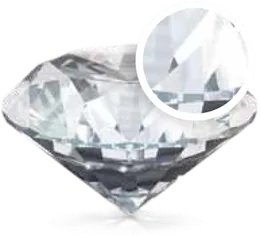
Symmetry
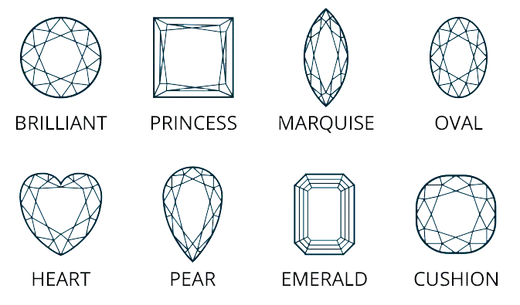
Shape
4. Cut
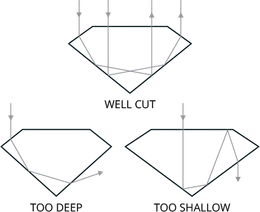
A diamond’s cut is essential to its beauty. When you cut a diamond, you adjust its proportions, symmetry and polish.
The cut is divided into 3 grades: proportions, polish and symmetry.
Each grade is evaluated according to four parameters: Excellent, Very Good, Good and Fair.